

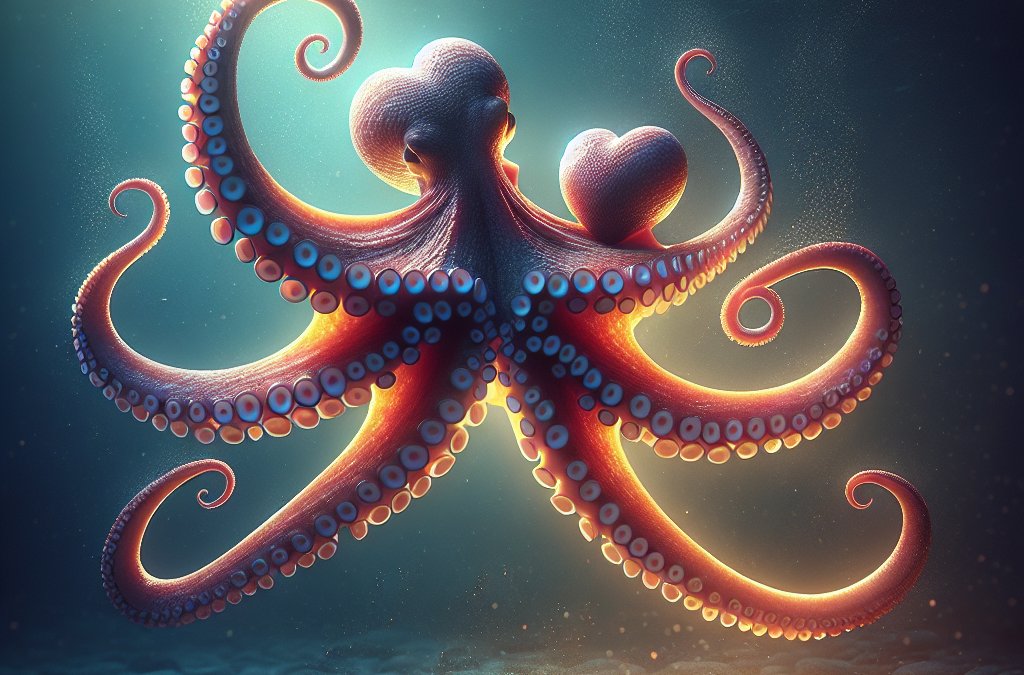
Octopuses have three hearts
When it comes to fascinating creatures of the deep blue sea, the octopus certainly tops the list with its unique features, one of which is having not one, but three hearts. These intelligent invertebrates use their trio of hearts to sustain their complex lifestyles under the ocean. Two of these hearts are dedicated to pumping blood to the gills, while the third heart pumps blood to the rest of the body. This incredible arrangement allows them to maintain efficient circulation as they navigate their often demanding aquatic environment.
Having a heart dedicated to the bloodstream and two others focused on the gills is not just a remarkable biological marvel; it’s a testament to evolution optimized for survival. This tri-heart system ensures that the octopus can survive and thrive in various sea depths, maintaining a consistent internal balance while its body adapts to pressure changes. This setup is particularly useful when the octopus propels itself by jet propulsion, a high-speed movement that temporarily stops the heart circulating blood to the body, meaning that part of its anatomy is momentarily without a blood supply.
This incredible feature adds to the octopus’s already impressive list of skills and talents, from their problem-solving abilities to their mesmerizing color-changing skills. Studying how such unique systems function offers scientists insights into evolutionary biology as well as potential medical breakthroughs for circulatory systems. It’s no wonder that octopuses continue to capture the imagination of scientists and marine enthusiasts alike!