Jan 11, 2026 | Wildlife
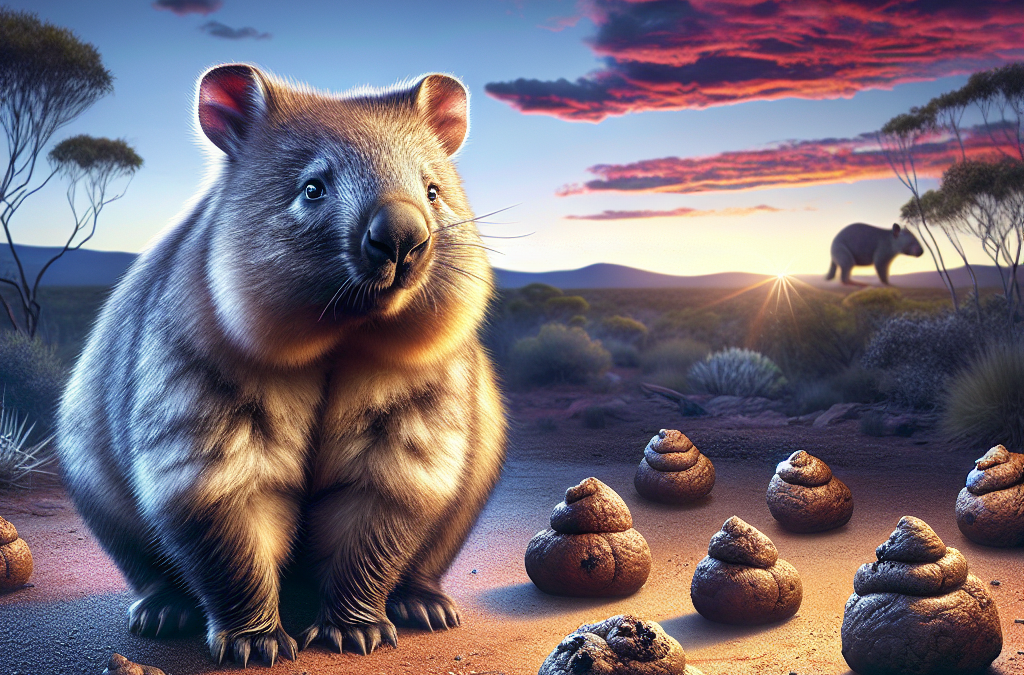
When it comes to the animal kingdom, few things are as delightfully quirky as the species known as the wombat. These Australian marsupials aren’t just cute, they are also creators of one of nature’s most peculiar wonders: cube-shaped poop. That’s right, while most animals produce rounded droppings, wombats defy geometric conventions with their unique, six-sided feces.
The mystery of the wombat’s cubed creations has fascinated scientists for years. The key lies within their digestive tract. The intestines of a wombat possess regions of varied elasticity, allowing the fecal matter to take on form over time, becoming more angular as it progresses through the digestive system. This adaptation is not just a biological accident; cubic poop assists the wombat by not rolling away as they use it to mark territory in the forests and grasslands they inhabit.
This fun fact about wombats is more than just a party conversation starter; it emphasizes the wondrous innovation of evolution. It highlights how even the most unexpected features can have real-world applications in survival and ecological interactions. So next time you’re looking for a quirky fact to share, or if you’re simply in awe of nature’s absurd beauty, consider the humble wombat, and its right-angle waste, as a testament to nature’s boundless creativity.

Jan 11, 2026 | Animals
Few facts from the animal kingdom are as surprising and delightful as the knowledge that wombat poop is cube-shaped. While this unique trait might sound like something out of a children’s fantasy story, it’s a fascinating reality! Wombats, native to Australia, produce cubed feces for a very practical reason. This geometric wonder prevents their droppings from rolling away, a crucial aspect given that wombats use these scent markers to communicate with one another.
The science behind this cube-shaped defecation was a mystery until researchers discovered that the varying elasticity of the wombat’s intestines creates this unusual shape. As the feces travel through, they start soft and progressively become firmer, while strategic squeezing molds them into cubes. This peculiar process results in about 80-100 little fecal cubes a night, which the wombats expertly place along their territories.
This remarkable evolutionary adaptation not only piques curiosity among scientists and animal lovers but also inspires engineers and designers alike. The cube-shaped poop has led researchers to experiment further in understanding how new manufacturing techniques could adopt similar principles. It’s amazing how nature offers practical inspiration, all stemming from the humble yet innovative wombat poop!
Jan 11, 2026 | Nature
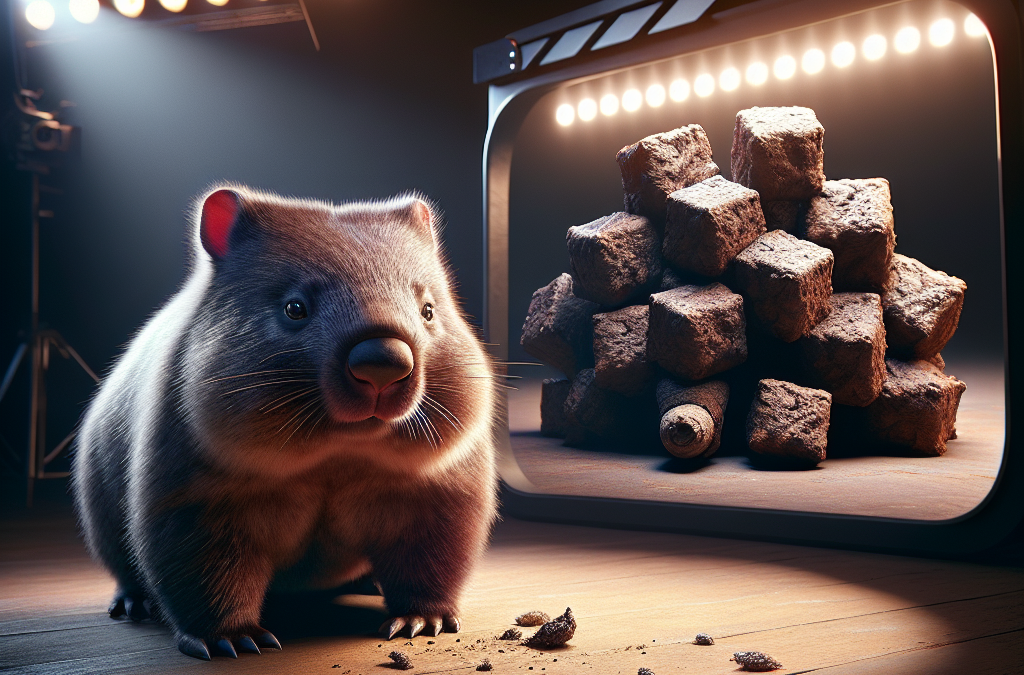
When you think of fascinating tidbits from the animal kingdom, the unique bowel movements of wombats might not be the first thing to come to mind. Yet, these adorable marsupials have a particularly intriguing quirk – their poop is cube-shaped. This curious phenomenon has captured the imagination of scientists and animal lovers alike, prompting a closer look into how and why these cuboid stools come to exist.
Wombats, native to Australia, are burrowing nocturnal animals that roam the land with a slow, determined gait. The cube-shaped feces they produce serve more than just a curiosity; it plays a crucial role in their territorial communication. The unique shape ensures that their droppings do not roll away, allowing them to mark their territory effectively. Recent studies suggest that the elasticity of the wombat’s intestine, which varies in stiffness, enables the formation of these cube shapes as they are compacted and sectioned in the final parts of the intestine.
In addition to preventing their scat from rolling off inconveniently, the cube shape also aids their nocturnal navigation by leaving robust markers on their trails. This form of locomotion helps wombats, with their relatively poor eyesight, to navigate and establish social cues within their habitat. The cube poop is resilient, like a load-bearing structure withstanding diverse weather conditions, ensuring that messages last longer on the rugged Australian terrain. Next time you think about wombats, remember, they might not just be a cute face and a furry body; they are masters of geometric pooping precision, turning what nature probably deemed a challenge into a strategic advantage!

Jan 11, 2026 | Nature
In the rich tapestry of nature’s wonders, the wombat surprises us in ways we always find astonishing. These delightful marsupials, native to Australia, have the unique distinction of producing cube-shaped poop. But how does this unusual phenomenon occur? It turns out that the wombat’s digestive process is a marvel of engineering. As food passes slowly through their long intestines, it becomes drier and more compact. Towards the end, a series of muscular contractions mold the feces into distinct, cube shapes. These cubes not only defy what we might expect from excrement but also serve a practical purpose in the wombat’s outdoor life.
Why cubes, you might ask? The answer can be found in nature’s clever design. By depositing cube-shaped droppings, wombats minimize the risk of them rolling away in their rocky and hilly habitats. This is vital, as wombats use their feces to communicate with one another. Marking territory and conveying messages about availability and identity becomes a more precise affair when these dung cubes stay put. The edges of their six-sided droppings are perfect for stacking and leaving at strategic locations. This gives new meaning to the term ‘information dump’ and showcases the profound interrelation between form and function in wildlife adaptations.
This quirky characteristic of wombats has even inspired engineers and inventors. The mechanics of how these animals produce cube-shaped feces could lead to innovative industrial applications where consistency and variety of shape are crucial. From design to production, understanding the wombat’s biological processes is influencing new ways of thinking about materials and manufacturing. Beyond just an odd fun fact, wombat poop encapsulates a remarkable aspect of animal genetics and behavior that continues to fascinate both scientists and the curious minds among us.
Jan 11, 2026 | Uncategorized
### Three Hearts and Eight Arms: The Charming Complexity of the Octopus
Ah, the octopus! Nature’s very own sci-fi character, spinning through the ocean with its eight elegant arms and a bag of surprises that would make even David Copperfield jealous. Today, we’re not just going to marvel at its ability to squeeze through a hole smaller than a coffee cup or match its surroundings like a master of disguise. Instead, we’re diving—tentacle-first—into the most peculiar fact of them all: octopuses have three hearts!
Yes, you heard it right. While we humans drag our single, love-battered hearts around, the octopus is showing off with not one, not two, but three hearts! That’s enough hearts for a soap opera plot twist where two break up and one finds love at first sight with a charismatic cuttlefish from the wrong side of the reef.
But these hearts aren’t just for melodramatic effect. Two of them are specialized branchial hearts, which pump blood to the gills where gas exchange occurs, making sure the eight-legged escape artist doesn’t turn blue from lack of oxygen while performing its underwater acrobatics. The third, the systemic heart, pumps the oxygenated blood to the rest of the octopus’s body, ensuring its tentacles have the strength to snatch up prey or perform an impromptu salsa dance if the ocean current hits just right.
Interestingly, the octopus’s blood is blue, thanks to a copper-based molecule called hemocyanin, crucial for transporting oxygen efficiently in cold and low-oxygen environments. So, in a way, these oceanic oddballs resemble royalty in their blue-blooded lifestyle, albeit of the invertebrate court.
Why, you might wonder, does an octopus need three hearts? Well, considering their mission impossible lifestyle—complete with dramatic escapes, puzzle-solving antics, and some of the most intelligent behaviors in the aquatic realm—it’s really a matter of efficiency. Whether slipping through narrow crevices to evade predators or launching surprise attacks on unsuspecting shrimp, having a triad of hearts ensures that their bodies are equipped to handle the most high-octane, aquatic capers.
So, next time you’re at the beach, dipping your toes in the water, give a little nod to our multi-hearted friends. Meanwhile, as you endure the roller-coaster ride of human emotions with only your single heart, remember: at the end of a long, tiring day, at least you don’t have to worry about keeping three of them ticking. Until you find love, of course—then things get complicated!
Jan 11, 2026 | Uncategorized
**The Eternal Sweetness: Why Honey Never Spoils**
Have you ever found a jar of honey at the back of your pantry that looks like it’s from the year Gutenberg was printing his first Bible and wondered if it’s still good? Fear not, intrepid explorer of expired goods! Unlike that sketchy can of beans you found alongside it, honey has a superpower worthy of a Marvel movie: it never spoils.
Yes, you read that right. Honey might just be the only thing in your pantry that could outlast even your most enduring kitchen mistake. Archaeologists have found pots of honey in ancient Egyptian tombs that are over 3,000 years old and still delicious enough to spread on your morning toast.
But what makes honey so durable in the face of time while everything else around it succumbs to the cruel clutches of spoilage? The secret, dear readers, lies in its miraculous chemistry.
First, honey is hygroscopic. Nope, that’s not a disease; it means honey has an incredible ability to absorb moisture from the air. But wait, isn’t that a bad thing? Not for honey! This quality, combined with its low water content, creates an environment too hostile for any spoilage-loving bacteria or microorganisms. Imagine being a bacterium trying to crash at Hotel Honey, only to be evicted by its dehydration policy. It’s like trying to hydrate in the Sahara.
Second, honey is naturally acidic with a pH between 3 and 4.5. This hostile environment is bacteria’s worst nightmare. Think of it as honey wearing a suit of armor, repelling all manner of microbial villains that dare approach.
Finally, honey contains hydrogen peroxide. Remember that brown bottle under your sink you use to clean cuts? Yeah, honey’s got that too. It’s like Mother Nature’s way of flexing her biochemistry skills, adding an extra layer of defense that any medieval knight would envy.
So next time you find that ancient-looking jar in your cabinet, have a little giggle at your moment of thriftiness. Spread that liquid gold on your breakfast with joy knowing it’s as fresh as when the bees left it. As you savor its sweetness, remember: honey might not grant you immortality, but it sure is fun to think it’s been on the same mission for millennia.
In the end, thank the bees. They not only give us honey; they give us time travel in a jar. And if you ever meet a bee, give it a wink. It’s not every day you get to thank the team behind the world’s longest-lasting food! 🍯🐝

Jan 11, 2026 | Uncategorized
Title: Venus: The Planet that Masters the Art of Taking It Slow
If Venus were a location on Google Maps, its reviews would read something like, “Great place to visit, but don’t expect a quick trip around!” or “Perfect for those looking to lengthen their stay—way longer than expected!” Why? Because on Venus, a day is, quite literally, longer than a year. Talk about a wild sleep schedule!
In the topsy-turvy world of Venus, one complete rotation on its axis (a day) lasts about 243 Earth days. Meanwhile, Venus takes a leisurely 225 Earth days to orbit the Sun and call it a year. So, before you finish saying, “What a long day!” a whole Venusian year could have passed.
Imagine the implications for a Venusian workweek. Instead of complaining that Monday is looming, you’d have enough time to prepare yourself for a single Monday that seems to stretch on… and on… and—oh look, a whole year has gone by! I suppose Venus is the perfect place for those who swear they’ve lived through the longest day at work.
This curious circumstance is mostly due to Venus’s incredibly sluggish rotational speed. While Earth rotates at a zippy 1670 kilometers per hour at the equator, Venus, presumably sipping its celestial coffee, rotates at a snail’s pace of about 6.5 km/h. Not exactly breaking any cosmic speed limits there, Venus.
Now, one must wonder about keeping up with time commitments on Venus: Does a Venusian planner resemble an ancient scroll unfurling to infinity? Are there Venusian sunscreens specifically designed to last 117 Earth days? These are not questions for mere Earthlings to answer, but they do make for fascinating speculation.
In this topsy-turvy orbit of ours, Venus reminds us that time is relative—not just to our hectic Earth schedules, but to an entire planet’s leisurely, scorching pace. So the next time you lament a day dragging on, just remember Venus. We promise your worst day is not orbit-budget-defying like a Venusian “day.”
Until next time, friends of the cosmos! Don’t forget to appreciate Earth’s whizzing clockwork—day in, day out, come rain or interstellar fog. Now, if we could just get our Monday meetings down to one Venusian morning…
Jan 11, 2026 | Uncategorized
**Title: The Heartfelt Secrets of the Octopus: Who Needs Just One?**
Ah, the octopus! That strange, squishy marine mastermind with more tricks up its tentacles than a magician at a birthday party. While most of us land-dwellers pride ourselves on our singular heart, working conspicuously (and hopefully regularly) to keep us alive, octopuses have gone and outdone us all. Forget about twinning it up—they’ve tripled the stakes! Yes, octopuses have three hearts. You might say they’re the romantics of the sea, if it weren’t for the fact that they tend to dwell alone, and when they do fancy a date, it sometimes ends in cannibalism. But I digress.
Let’s dive into the nitty-gritty of this heart-filled curiosity. So why do these eight-armed wonders require three times the cardiac hardware? Picture this: two of the hearts are gill hearts. Their job is to pump blood to the gills, where it picks up oxygen. The third heart, known as the systemic heart, pumps the oxygen-rich blood to the rest of the delicious, boneless body. It’s like a perfectly synchronized dance of blood circulation, without all the drama of choreographing a Broadway show.
Being equipped with three hearts isn’t just a quirky anecdote—it’s a survival strategy. Given their penchant for escaping into the tightest crevices, these multi-hearted mollusks have evolved to maximize efficiency. With their powerful arms pulling off escapades that would make Houdini himself jealous, their systemic heart impressively takes a breather when they swim, giving them just the edge to not skip a beat (literally) while lounging in their cozy dens.
However, before you go customizing a Valentine’s Day card for your cephalopod friend with not one but three times the love, remember this: an octopus may look like it could love you three times over, but in reality, they’re fiercely independent. Maybe it’s all those hearts; they’ve got a lot of self-love going on.
So, here’s to the octopus, a creature that truly wears its hearts on its metaphorical sleeves. Next time you find yourself fretting over a broken heart, just remember—if an octopus can juggle three, surely we can mend our one. As we celebrate this marvel of nature, let’s all strive to live with as much heart as an octopus, minus the complicated love life.

Jan 11, 2026 | Uncategorized
Picture this: you’re rummaging through an old, dusty attic, sidelining spiders and stacks of forgotten memorabilia, when you stumble upon an ancient jar of honey. Instinct tells you it should be long expired—after all, those tax returns from 2002 already look fossilized. But, lo and behold, honey doesn’t play by the normal rules of Mother Nature’s ticking clock. That golden jar of goodness isn’t spoiled; it’s simply waiting for its grand debut. Honey’s oddball resistance to spoiling makes it the quirky superhero of the food world, capable of outliving even some Twinkies—and that’s truly something!
So, what’s honey’s secret to eternal life? It’s all about its makeup: low moisture and high acidity. Like that friend who always brings store-bought cookies to a bake sale, bacteria and yeast simply can’t thrive in honey’s inhospitable environment. This sugary gold mine is a carbohydrate fortress, armed with just enough acidity to declare, “Not today, mold!” It also helps that bees are the ultimate perfectionists. Their gift to us is a substance so ingeniously formulated that it even fended off the passage of several millennia when found sealed in ancient Egyptian tombs. If it was good enough for Cleopatra, maybe it’s time to reconsider those best-by dates!
Say what you will about modern preservatives, but honey’s been doing it naturally—and stylishly—since the beginning of time. It’s like the vintage wine of the pantry, always ready for the right moment to impress. Planning a medieval-themed dinner or simply running low on sugar? Reach for that honey, knowing its past is almost as rich as its taste. But fair warning: with its indefatigable durability, honey might just make you question the expiration dates on everything else in your pantry. Keep the faith, and maybe—just maybe—it’ll stick around for eternity!

Jan 11, 2026 | Uncategorized
Pop quiz! Which of these do you think belongs to the berry club: bananas or strawberries? If you guessed strawberries, you’re in for a fruity surprise! Despite what their names may suggest, bananas are officially card-carrying members of the berry family, whereas strawberries just didn’t make the cut. Nature sure has a knack for plotting its own little twist endings, doesn’t it?
Let’s dive into this fruity mystery with a touch of botanical science. In the world of botany, a berry isn’t just any cute little fruit that’s small, bright, and sweet. No, dear reader, a true berry is a fleshy fruit produced from a single ovary containing seeds embedded within its flesh. That’s a fancy way of saying that bananas, with their one-ovary origins and delightfully seedy innards, meet the berry criteria perfectly. Strawberries, on the other hand, are like the high school rebels of the fruit world. They develop from a flower with multiple ovaries and proudly display their seeds on the outside, making them accessory fruits, not bona fide berries.
So, the next time you’re tossing a banana into your morning smoothie or slicing strawberries for a charming dessert, remember this little nugget of trivia. Whether you find yourself bewildered by botanical definitions or just amused by nature’s creativity in classification, it’s a berry good reminder that not everything is as it seems. And really, isn’t that what makes the world of fruits—like life—deliciously unpredictable?